
Since their introduction in the 1980s, sintered NdFeB permanent magnets have been widely used in automotive, wind power, aerospace, defense, and many other industries due to their outstanding magnetic performance. In recent years, rapidly growing demand from applications such as wind turbines and new energy vehicles has placed increasingly higher requirements on the coercivity and thermal stability of NdFeB magnets.
Because the magnetocrystalline anisotropy field of the Dy₂Fe₁₄B phase is significantly higher than that of Nd₂Fe₁₄B, and its Curie temperature is also relatively higher, the addition of dysprosium (Dy) can greatly enhance both the coercivity and high-temperature performance of NdFeB materials. As a result, sintered NdFeB magnets designed for high coercivity and elevated operating temperatures often contain a high Dy content, sometimes exceeding 10%.
However, it is well known that heavy rare earth elements such as Dy and Tb are extremely expensive. Large-scale addition of these elements leads to a sharp increase in production cost. Therefore, a key technical challenge in NdFeB magnet development has become how to achieve high coercivity and good thermal stability while minimizing the consumption of Dy and Tb.
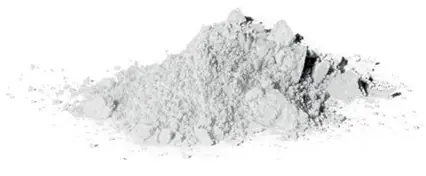
In traditional alloying approaches, heavy rare earth elements such as Dy and Tb are added directly during the melting process, together with Nd, Fe, and B. As a result, Dy is distributed not only along the grain boundaries but also inside the main Nd₂Fe₁₄B phase of the final magnet.
However, studies have shown that Dy located at the grain boundaries plays the most critical role in improving coercivity, while Dy inside the grains contributes far less. From this perspective, the conventional bulk-alloying method is not an efficient use of heavy rare earth resources.
Japanese researchers were the first to propose the concept of grain boundary diffusion (GBD). Using specially designed processes, Dy is introduced so that it diffuses preferentially along grain boundaries without entering the grain interiors. This approach not only improves the magnetic performance of NdFeB magnets, but also significantly reduces the total amount of Dy required, thereby lowering material cost.
In early implementations, Dy vapor was deposited onto the surface of NdFeB powder particles during powder preparation. During subsequent sintering, Dy atoms diffused along the grain boundaries. Dy located at the grain boundaries exhibits antiferromagnetic coupling with Fe, which dramatically increases coercivity with almost no reduction in remanence. Using this method, coercivity was increased from approximately 800 kA/m to 1800 kA/m.
Mechanical processing can damage the surface of NdFeB magnets, leading to local degradation of magnetic properties. This effect is particularly pronounced for small-sized magnets, where surface damage can cause a significant reduction in coercivity. Grain boundary diffusion technology not only enhances overall coercivity, but can also repair and strengthen the magnetic performance of the magnet surface.
As a result, grain boundary diffusion has attracted widespread attention in recent years. The main preparation methods currently in use include vapor deposition diffusion, magnetron sputtering, and surface coating diffusion.
Vapor Deposition Diffusion
In the vapor deposition diffusion process, Dy or Tb (or their compounds) and the original NdFeB magnets are placed together in a deposition furnace. Under high-temperature heating, the heavy rare earth elements evaporate, and with the assistance of an inert carrier gas, they deposit onto the magnet surface and subsequently diffuse inward along the grain boundaries.
One of the key advantages of vapor deposition diffusion is that sublimation of the Dy/Tb source, surface deposition, and grain boundary diffusion occur simultaneously at high temperature. This enables more complete diffusion of heavy rare earth elements, maximizes utilization efficiency, and significantly reduces the total Dy/Tb consumption. As a result, this method makes it possible to produce high-coercivity NdFeB magnets with low heavy rare earth content, achieving both performance improvement and cost reduction.
Magnetron Sputtering Diffusion
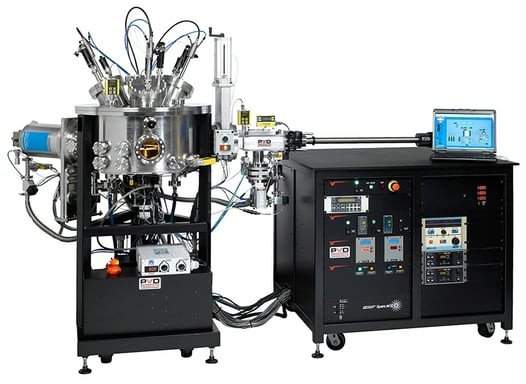
Unlike vapor deposition diffusion, magnetron sputtering diffusion separates the deposition step from the diffusion step. In this process, Dy is first deposited onto the surface of the original NdFeB magnet by physical sputtering, followed by a high-temperature heat treatment to drive Dy diffusion along the grain boundaries.
Magnetron sputtering offers several advantages, including uniform film deposition and a strong coercivity enhancement effect. Experimental studies have shown that for N35 sintered NdFeB magnets, both in the as-sintered state and after tempering, Dy diffusion treatment via magnetron sputtering leads to a substantial increase in coercivity with only minimal loss in remanence.
Specifically, after sputtering-based Dy diffusion:
- The remanence decreased by only 0.009 T (as-sintered) and 0.03 T (tempered),
- While the coercivity increased by 708.44 kA/m and 665.46 kA/m, respectively,
- Corresponding to coercivity increases of 73.5% and 64.8%.
Notably, the average Dy mass fraction in the magnets increased by less than 0.4%, demonstrating the high efficiency of Dy utilization achieved by this method.
After Dy diffusion treatment, Dy is observed to form a continuous, band-like enrichment in the Nd-rich grain boundary phase, making this phase more continuous and smoother. This improvement in grain boundary morphology is one of the key reasons for the observed coercivity enhancement.
In addition, the formation of a (Nd,Dy)₂Fe₁₄B epitaxial shell around the grains introduces a region with a higher magnetocrystalline anisotropy field. This hardened grain shell effectively suppresses reverse domain nucleation, which is another major mechanism responsible for the significant increase in coercivity.
Surface Coating Diffusion Method
The surface coating diffusion method involves directly applying a rare-earth compound onto the surface of the original NdFeB magnet. After drying, the coated magnet is subjected to high-temperature heat treatment in an inert atmosphere, allowing heavy rare earth elements to diffuse along the grain boundaries.
This method can also significantly enhance coercivity and has the advantage of a simple and flexible process, making it relatively easy to implement in practice. However, its main limitation lies in the difficulty of achieving uniform coating thickness, which may lead to incomplete or uneven diffusion of Dy or Tb. As a result, the coercivity improvement and reproducibility are generally less consistent compared with vapor deposition or magnetron sputtering methods.
Summary
Dy/Tb grain boundary diffusion technology provides an effective solution to the long-standing challenge of achieving high coercivity and good thermal stability in NdFeB magnets while minimizing heavy rare earth consumption. By selectively enriching Dy or Tb at the grain boundaries—where they are most effective—this technology dramatically improves coercivity with minimal loss of remanence and significantly reduced Dy/Tb usage.
Among the available methods, vapor deposition diffusion offers high diffusion efficiency and excellent Dy/Tb utilization, magnetron sputtering diffusion delivers precise control and outstanding coercivity enhancement with very low rare earth addition, and surface coating diffusion provides a simpler but less uniform alternative.
As demand continues to grow in high-performance applications such as electric vehicles, wind power, and aerospace, grain boundary diffusion has become a key enabling technology for producing cost-effective, high-coercivity NdFeB magnets. Future work will further refine these processes and tailor them to specific application requirements.